Product selection guides
What is Isononanoic Acid? Identity, uses and selection checks
A concise guide to Isononanoic Acid identity, approved applications, product data and the checks needed before formulation.
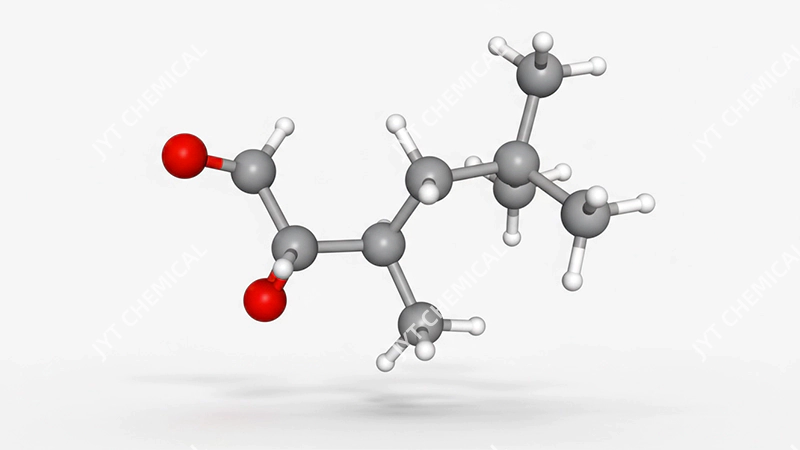
Isononanoic Acid is a branched C9 carboxylic acid used as an intermediate in lubricant ester, coolant, coating and specialty chemical systems. The name is useful for product discovery, but buyers should confirm the exact chemical identity and grade before making a technical comparison.
This guide describes the Isononanoic Acid product listed by JYT Chemical and the information needed for an initial selection. It does not assign performance to a finished formulation without test data.
Product identity
JYT Chemical identifies its Isononanoic Acid as 3,5,5-trimethylhexanoic acid. PubChem lists the same chemical name, molecular formula and CAS number.
| Item | Identity |
|---|---|
| Product name | Isononanoic Acid |
| Chemical name | 3,5,5-Trimethylhexanoic acid |
| Common abbreviation | INA |
| CAS number | 3302-10-1 |
| Molecular formula | C9H18O2 |
| Molecular weight | 158.238 g/mol |
| Chemical family | Branched C9 carboxylic acid |
Isononanoic Acid and Isononanoic Acid M are not the same listing
Commercial names need careful checking. JYT lists Isononanoic Acid and Isononanoic Acid M as separate products.
The first is identified as 3,5,5-trimethylhexanoic acid with CAS number 3302-10-1. Isononanoic Acid M is identified as a mixture of branched C9 carboxylic acid isomers, and the approved product data does not state a CAS number for that mixture. A purchasing specification should use the full product identity rather than the abbreviation INA by itself.
This check prevents an avoidable error: comparing a single identified acid and an isomer mixture as if their composition were identical.
Where JYT lists Isononanoic Acid for use
The approved product data maps Isononanoic Acid to three application groups.
Lubricants and metalworking fluids
Isononanoic Acid is listed as a precursor for polyol ester synthetic lubricants. It is also used in coolant corrosion inhibitor systems and metalworking applications. These statements identify relevant development routes, not a guaranteed finished fluid result.
For a formulation project, the next questions concern the intended derivative, reaction conditions, target fluid properties, additive package and required test methods. Evaluating Isononanoic Acid for Engineered Fluids sets out a practical screening framework.
Coatings and resins
The current data lists use in paint driers and alkyd resin systems. Formulators should confirm the role of the acid or its derivative in the selected resin or drier chemistry, then test the complete formulation against its curing, appearance, storage and film performance requirements.
The approved information does not support a general claim that Isononanoic Acid will reduce VOC content, improve yellowing resistance or replace another acid in every coating system. Those conclusions require formulation specific evidence.
Industrial intermediates
Isononanoic Acid is also listed as an intermediate for acid chlorides and cosmetic ingredients. An intermediate use does not by itself confirm suitability for a finished product. The downstream process, impurity controls, regulatory requirements and product specification still need review for the intended market.
What the JYT grade controls
JYT’s current product data lists the following specification values for Isononanoic Acid:
| Property | JYT product data |
|---|---|
| Acid value | Minimum 350 mg KOH/g |
| Purity | Minimum 99.5% |
| Color | Maximum 10 Pt/Co |
| Moisture | Maximum 0.1 wt% |
| Density | 0.901 g/cm3 at 20°C |
| Boiling point | 243.3°C at 760 mmHg |
| Flash point | 125°C |
| Refractive index | 1.438 n(20°C/D) |
The minimum and maximum values are grade controls. The remaining physical values should be read in the context of the current TDS and its stated test conditions. They are not a substitute for a batch COA or for data generated in the buyer’s formulation.
A practical selection sequence
Buyers and formulators can narrow the choice with a short sequence.
- Confirm whether the requirement is for 3,5,5-trimethylhexanoic acid or an isomer mixture.
- Define the chemical role: ester precursor, corrosion inhibitor route, resin or drier intermediate, or another approved intermediate use.
- Compare the grade controls with the reaction and finished product requirements.
- Review the current TDS and SDS. Request a batch COA when a specific lot is being qualified.
- Run a sample in the intended process and test the complete downstream material.
This order keeps identity questions separate from application performance. It also makes supplier discussions more precise because both parties can refer to the same grade and acceptance criteria.
What cannot be concluded from the product name
The branched structure is part of the material’s identity, but it does not prove a pour point, oxidation life, hydrolytic stability, coating durability or service interval. It also does not establish regulatory acceptance for a particular finished product or market.
Those results depend on the derivative, formulation, processing conditions and test method. When a performance target is important, ask for the relevant data and confirm it in the intended system rather than relying on a broad statement about branched chemistry.
Next step
Use the Isononanoic Acid product page to review the current approved grade information. A sample is the appropriate next step when the identity and specification fit the project but application performance still needs confirmation. Technical documents can be requested separately for product, handling and batch review.
Reference basis
The identity data was checked against the PubChem record for 3,5,5-trimethylhexanoic acid. A current manufacturer product data sheet was reviewed as an external source for material identity and stated industrial uses. JYT grade values and application mappings come from the project’s approved product data.