Application notes
Evaluating Isononanoic Acid in Alkyd Resins and Paint Driers
A practical framework for evaluating isononanoic acid in alkyd resins, stoving enamels, metal carboxylate driers, and coating durability tests.

Isononanoic Acid (INA) is used in paint driers and alkyd resin systems, but that application history does not settle how it will behave in a specific coating. Resin architecture, solids level, solvent package, pigment load, drier metal, cure schedule, and film thickness can all change the result. Start with the formulation target and a controlled comparison. One raw material cannot be credited with several film properties before testing.
Where INA fits in coating development
Isononanoic Acid is a branched C9 carboxylic acid. The current JYT grade has a specified purity of at least 99.5%, acid value of at least 350 mg KOH/g, color of no more than 10 Pt/Co, and moisture of no more than 0.1 wt%. Its approved application scope includes alkyd resins and paint driers.
Those values describe the supplied acid. They do not predict resin viscosity, drying time, gloss, weathering, or chemical resistance in a finished coating. Each of those results depends on the full resin and coating system.
Evaluate the alkyd resin before making a low-VOC claim
Published alkyd-resin patent literature includes isononanoic acid among the branched monocarboxylic acids used to modify alkyd resins. In resin design, a monocarboxylic acid can affect chain growth and the balance of acid and hydroxyl functionality. The size of that effect depends on the complete charge calculation, reaction conversion, oil length, polyol functionality, and other monomers.
Fixed solids ranges and automatic viscosity reduction cannot be assumed for a new formula. A formulator should measure the result in the intended resin rather than transfer a percentage from another formulation.
A useful resin trial records:
| Check | Why it belongs in the trial |
|---|---|
| Charge ratio and acid equivalents | Keeps the comparison chemically meaningful |
| Reaction temperature and time | Shows whether the raw-material change affects processing |
| Final acid value | Confirms the selected reaction endpoint |
| Nonvolatile content and viscosity at a stated temperature | Tests whether the solids and application target can be met together |
| Color and clarity | Flags changes that may matter in pale or clear finishes |
| Storage stability | Checks whether the resin remains usable over the planned hold period |
Lower solvent use can only be claimed after the modified resin reaches the required application viscosity at the measured nonvolatile content. VOC calculations must then use the actual formulation and the rules for the destination market.
Stoving enamels need film data

INA can be evaluated as an acid component in alkyd or polyester systems intended for baking enamels. Its saturated, branched identity is relevant to the resin design, but structure alone does not prove better color retention, gloss retention, UV stability, or chemical resistance.
Keep the resin synthesis and coating formulation records together. At minimum, compare cure response at the intended metal temperature and dwell time, initial color, gloss, hardness development, adhesion, impact resistance, and resistance to the fluids the coated part will encounter. If heat aging or outdoor exposure matters, use an agreed method and a control formulation.
Treat incorporation and finished-coating performance as separate questions. A resin can accept INA and still miss the application’s film requirements.
Paint driers are systems, not direct acid substitutions
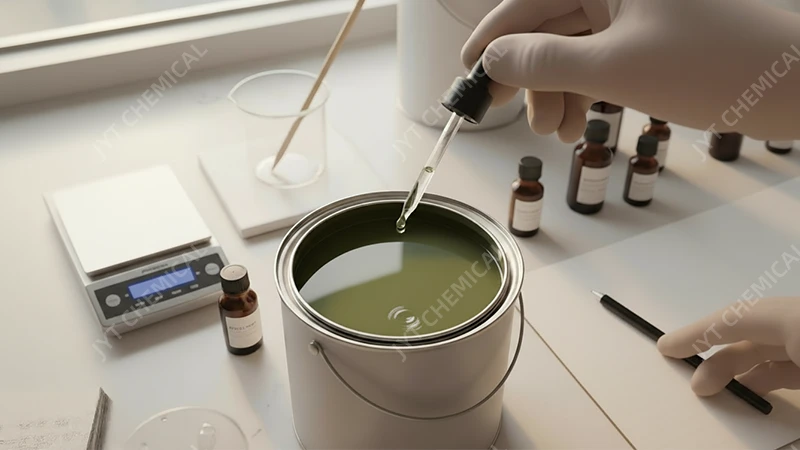
Metal carboxylates are used in oxidatively drying alkyd coatings. The metal provides the main catalytic function, while the carboxylate is involved in stabilizing and distributing the metal-containing component in the coating medium. Isononanoic acid is used to prepare paint driers, which makes it a relevant feedstock for this chemistry.
Calling it a universal substitute for another carrier acid would skip the formulation work. A fair comparison matches metal content and checks the complete drier package in the target binder. Surface dry, through dry, hardness development, wrinkling, yellowing, storage stability, and compatibility can respond differently when the metal, ligand, co-drier, solvent, or water content changes.
Hazard and regulatory review also belongs at the substance and finished-product levels. Request the current SDS for the candidate grade and assess it against the intended use and destination market. The absence or presence of one classification does not establish that the complete coating is compliant.
Weatherability must be demonstrated
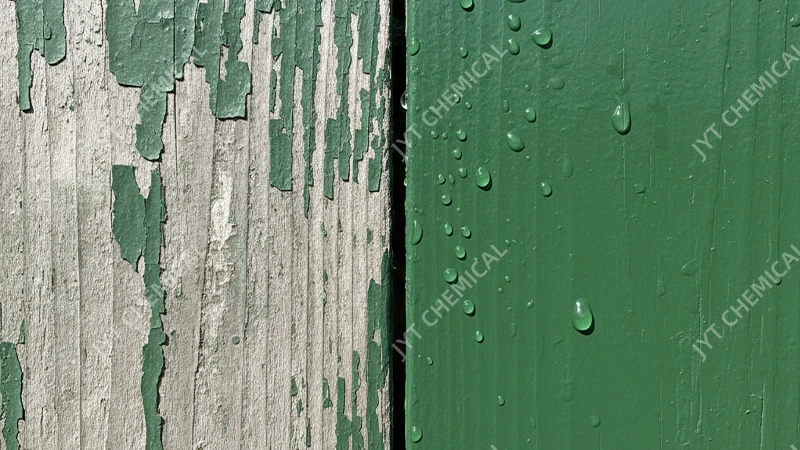
Broad resistance to sunlight, water, and chemicals cannot be assigned to one acid without comparative film data. Pigments, stabilizers, crosslink density, cure, substrate preparation, and film thickness all contribute.
For exterior or demanding industrial service, define the failure mode before choosing a test. Gloss and color change, chalking, blistering, adhesion loss, water uptake, and chemical spot resistance answer different questions. Accelerated testing can support screening, but the method, exposure cycle, evaluation interval, and control must be recorded.
A controlled qualification sequence
- Define the coating target, including application viscosity, nonvolatile content, cure conditions, appearance, and service exposure.
- Choose a current production resin or drier package as the control.
- Adjust the experimental formula on an equivalent chemical basis. Do not compare equal weights without checking acid or metal equivalents.
- Record resin processing and supplied-product data before film testing.
- Apply both coatings at controlled film thickness and cure them under the same conditions.
- Review the current SDS, destination-market requirements, and any customer restrictions separately from performance testing.
- Confirm the selected formulation at pilot scale before commercial approval.
INA has an established place in JYT Chemical’s coating application scope, particularly for alkyd resins and paint driers. Suitability still comes from the formulation record and test data. For an evaluation, review the current product data, then request a sample or request technical documents for the grade under consideration.